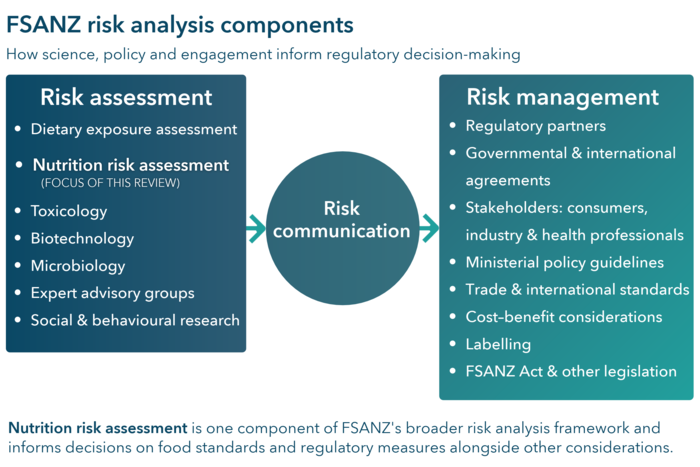
Enhancing the FSANZ nutrition risk assessment framework to support broader public health objectives
FSANZ commissioned an independent expert review of its nutrition risk assessment methodologies to ensure they remain fit for purpose in a rapidly evolving food environment.
The review found that FSANZ's approach is technically robust, methodologically rigorous and aligned with established international frameworks. It confirmed that the foundations of the current approach remain sound and continue to support evidence-based regulatory decision-making that protects public health and safety.
The review did not identify a need for fundamental change. Instead, it identified targeted opportunities to strengthen how nutrition evidence is assessed, communicated and applied to increasingly complex food and public health challenges.
FSANZ welcomes the recommendations and will implement a phased program of continuous quality improvement. Initial priorities include clearer problem formulation, stronger integration across scientific disciplines, closer links between assessment and regulatory decision-making, greater transparency around evidence, uncertainty and scientific judgement, and proportionate use of scenario or options analysis where it adds value.
Many of these proposed improvements will build on work already underway. Over time, stakeholders should see clearer explanations of the public health and regulatory context, the scope and boundaries of assessments, key assumptions and uncertainties, and how the scientific evidence informs regulatory advice.
The review also identified longer-term opportunities to strengthen capabilities in areas such as dietary patterns and chronic disease assessment, food composition data and post-market monitoring. Progressing these opportunities may require additional resources, clearer responsibilities and coordination across the food regulatory system.
Nutrition risk assessment continues to evolve as regulators respond to emerging technologies, changing dietary patterns, population health challenges and new expectations for evidence-informed decision-making. FSANZ will continue to engage with regulatory, scientific and public health partners in Australia, New Zealand and internationally to support practical, transparent and science-based approaches.
By building on a strong technical foundation and embracing continuous improvement, FSANZ aims to ensure its nutrition risk assessment approach remains responsive to emerging challenges and continues to support safe, trusted and effective food regulation for the Australian and New Zealand community.